
Back to the Garden: An Edenic Approach to Colorectal Cancer Prevention
Colorectal cancer (CRC) is now the number one cause of cancer-related death in Americans under 50. The American Cancer Society estimates that in 2026 alone, approximately 108,860 new cases of CRC will be diagnosed in the United States, and about 55,230 deaths will occur.
For decades, colorectal cancer was considered an older person’s disease. Routine screenings began at 50, and younger adults were rarely on anyone’s radar. But the data tells a different story today.
The Cancer Research Institute reports that while rates of CRC are declining among older generations, they’re rising by nearly three percent a year in those under 50.
What Is Happening in the Body?
Colon cancer typically begins as small polyps growing on the inner lining of the large intestine. Over time, these polyps can become malignant, invade surrounding tissue, and spread through the bloodstream to other organs. What makes this crisis especially devastating is that three out of four young adults diagnosed are already at a late stage, because nobody thinks to look sooner.
While genetics, environment, and other factors all play a role in CRC, research consistently points to modern lifestyle patterns as major contributors. Highly processed diets, low fiber intake, sedentary living, and chronic stress all significantly increase one’s risk.
No single choice guarantees immunity, but as Proverbs 26:2 reminds us, “Like a flitting sparrow, like a flying swallow, so a curse without cause shall not alight.” Scripture has something to say about colorectal cancer, and it isn’t new. It actually started in Eden.
The Garden and the Microbiome
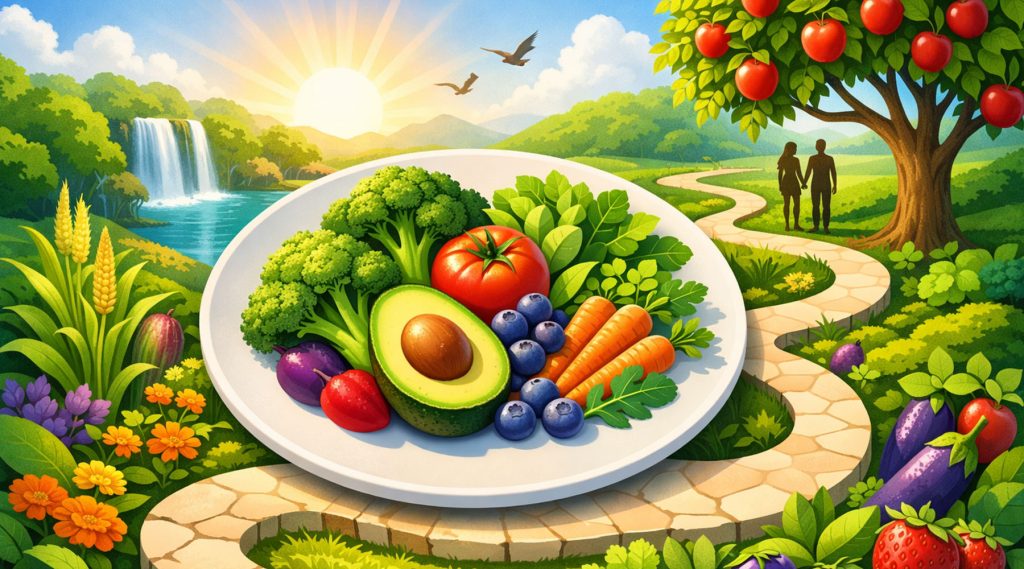
When God created Adam and Eve, He gave them a specific diet. “See, I have given you every herb that yields seed which is on the face of all the earth, and every tree whose fruit yields seed; to you it shall be for food” (Genesis 1:29). Later, after sin entered the world, God expanded that provision to include “the herb of the field” (Genesis 3:18).
From the beginning, God’s dietary blueprint was entirely plant-based. And plants contain one essential dietary component that animal products fundamentally lack: fiber. Its impact on the human body is profound.
When we consume fiber from whole plants, beneficial gut bacteria ferment it and produce short-chain fatty acids, particularly butyrate, which actively protect the lining of the colon from cancerous changes. Without adequate fiber, those protective bacteria starve, the gut microbiome deteriorates, and the colon becomes vulnerable.
Research today confirms that populations eating high-fiber, plant-rich diets show dramatically lower rates of colorectal cancer, and that for every additional 10 grams of fiber consumed daily, colorectal cancer risk drops by seven percent. But what we steer clear of matters just as much as what we add to our plates.
A Lesson From Babylon
When King Nebuchadnezzar conquered Jerusalem, he selected the brightest young men of Israel—among them Daniel, Hananiah, Mishael, and Azariah—to be trained in the ways of Babylon. As part of their preparation, they were assigned the king’s food: rich meats, wine, and the delicacies of the royal table; a diet strikingly similar to the standard American one today.
By any cultural standard, it was a privilege to dine on the king’s food. But Daniel, led by his faith in God, understood no good could come from disregarding the Lord’s dietary counsel. So he requested vegetables to eat and water to drink instead (Daniel 1:12).
After ten days, Daniel and his companions appeared healthier and better nourished than all the young men who had eaten from the king’s table (Daniel 1:15). What they avoided eating mattered just as much as what they chose to eat.
Recent studies show that individuals with the highest intake of red meat had a 30 percent increased risk of colorectal cancer, while those consuming the most processed meat had a 40 percent increased risk. Ultra-processed foods compound the damage further by triggering chronic inflammation in the colon and progressively suppressing the body’s ability to heal. The king’s table, it turns out, was never safe.
The good news is that the gut microbiome is remarkably responsive to dietary change. Research shows that switching to a plant-based diet can begin to improve the microbiome’s composition within days, with beneficial microbes becoming more influential relatively quickly. While individual responses vary, the evidence is clear: It is never too late to start tending the garden within.
Scripture has something to say about colorectal cancer, and it isn’t new. It actually started in Eden.
Steps You Can Take Today
- Prioritize plants. Pack your meals with vegetables, legumes, fruits, whole grains, nuts, and seeds. Aim for 30 different plant foods per week. Research shows that people who consume 30 or more different plant varieties weekly have significantly greater gut microbiome diversity than those who eat fewer than 10. Avoid processed meats and cut ultra-processed foods as aggressively as you can.
- When in doubt, get screened! While screening guidelines now recommend beginning at age 45 for average-risk adults, if you have a family history of colorectal cancer, you should speak with your doctor about starting earlier. A colonoscopy can both find and remove pre-cancerous polyps in a single procedure. Do not wait for symptoms.
- Move your body. Regular physical activity reduces colorectal cancer risk by approximately 24 percent in men and 23 percent in women, with exercise reducing chronic inflammation, boosting immune function, and positively affecting the gut microbiome. Obesity raises colorectal cancer risk and compounds every other factor.
- Know the warning signs. Blood in the stool, persistent changes in bowel habits, unexplained abdominal pain, sudden weight loss, or constant fatigue are all reasons to schedule a check-up.
There Is Still Hope
The good news is that this cancer is largely preventable. “So whether you eat or drink, or whatever you do, do all to the glory of God” (1 Corinthians 10:31). The choices we make at the table are daily acts of faithfulness to the body God has entrusted to us.
The Creator designed us to thrive on the foods He made. Science confirms it. Return to whole foods. Return to the original design and trust the One who said, “I am the LORD who heals you” (Exodus 15:26).
Learn more about God’s health care plan.
More on AF Blog

War With Iran and Armageddon
The United States and Israel attacked Iran in a bid to eliminate its nuclear program…

Is AI Eroding Your Emotional Health?
Over the past several months, a growing number of studies have suggested an association between…

Faith Against the Screen: A Century of TV Versus God’s Eternal Word
For 100 years now, video content has been shaping our desires and dulling moral judgment.…
Knives Over Forks—Really?
Amid the conflict and confusion surrounding the new food pyramid, there are mountains of evidence…

2026: Rage Bait … or Inexpressible Joy?
The year 2025 was one of escalating tensions—between nations, cultures, and individuals. Events seemed calculated…