
Are Digital IDs the Mark of the Beast?
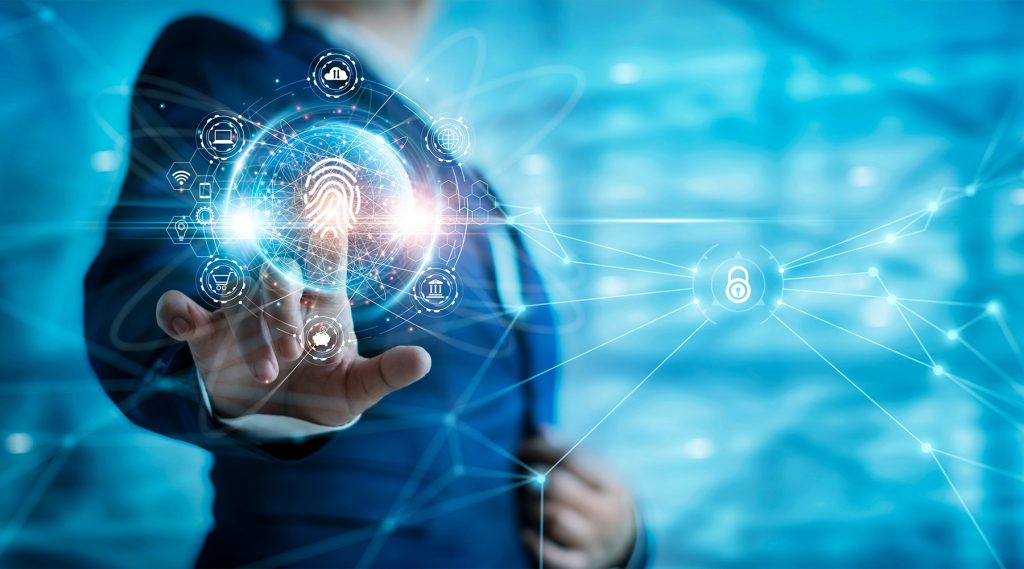
In September 2025, Britain’s prime minister, Keir Starmer, announced that the British government would implement a nationwide digital identification system. “A new free-of-charge digital ID [will be] mandatory for the right to work by the end of this parliament,” he said. “You will not be able to work in the United Kingdom if you do not have digital ID. It’s as simple as that.” The goal, he explained, is to curb illegal immigration and simplify access to services for British citizens.
His announcement provoked a storm of opposition, both within the UK and abroad. Groups like Big Brother Watch warn that the new “BritCard” will turn the UK into a “papers, please” society, marginalize those who cannot or will not use the system, and create serious data-privacy risks.
Britain is not the first country to utilize a digital identification system. China famously uses digital and biometric data to identify and track its citizens. Other nations—including Austria, Singapore, Australia, Spain, South Korea, and India—also employ digital ID systems. Twelve U.S. states now offer the option of adding a driver’s license to a digital wallet in Apple or Google systems.
Digital IDs can offer significant benefits: convenience, fraud protection, and streamlined business services. But the dangers are potentially huge, including privacy concerns, vulnerability of personal data to hackers or corporations, and the possibility of expanded government surveillance.
Should Christians Be Concerned?
The renewed discussion has many Christians wondering whether digital IDs are the mark of the beast—or at least a step toward it. One user on X, @karma44921039, wrote, “world government is rolling out the mark of the beast ID which will soon become a chip for your hand with bio metrics for your face… it truly is the mark of the beast brought to us by devil worshippers.”
Others have fought digital ID systems in court. A coal miner refused to use a biometric hand-scanner at work and was fired; he sued, testifying that he feared being “marked”—identified “with the antichrist.” In another case, a parent refused to allow their child to carry a Smart ID card, believing the chip embedded in the badge was the mark of the beast. Yet another parent, attempting to receive state benefits, testified, “If I were to take the mark of the beast, which is what I believe finger imaging may be, it would be damnation to my eternal soul.”
Are they right? Will using digital identification systems cause someone to receive the mark of the beast? Or does the Bible teach something entirely different?
What Is the Mark of the Beast?
The Bible’s most dire warning appears in Revelation 14:9–11: “If anyone worships the beast and his image, and receives his mark on his forehead or on his hand, he himself shall also drink of the wine of the wrath of God, which is poured out full strength into the cup of His indignation. He shall be tormented with fire and brimstone in the presence of the holy angels and in the presence of the Lamb. And … they have no rest day or night, who worship the beast and his image, and whoever receives the mark of his name.”
It’s no wonder people fear receiving this mysterious mark.
There will be no middle ground.
The Bible explains that at the end of time, every person will be marked—either with the seal of God or with the mark of the beast. There will be no middle ground.
The seal of God is given to those who sorrow over sin (Ezekiel 9:4) and are filled with the Holy Spirit (Ephesians 1:13, 14; 2 Corinthians 1:22). They have the Father’s name “written in their foreheads” (Revelation 14:1 KJV), meaning their minds have received the impress of God’s character. They have learned to love, think, and act like Jesus. Their allegiance to God is revealed by keeping the Sabbath of the fourth commandment (Exodus 20:8–11), which contains all three elements of a king’s seal: His name (“the LORD”), His title (Creator), and His territory (“heaven and earth”). Those who receive God’s seal are protected from the final plagues (Revelation 7:1–3).
In contrast, the mark of the beast is received by those who accept the devil’s final deceptions through the antichrist beast power (Revelation 13). Receiving the mark in the forehead or hand symbolizes that their thoughts and actions reflect rebellion against God. The visible sign of this mark is not a number or a tattoo; rather, it is expressed in who and when we worship. Just as the seventh-day Sabbath is the sign of God’s faithful people, keeping Sunday sacred will be the outward sign of those who receive the mark of the beast.
So … Is the Mark a Digital ID?
The Bible explains that the mark of the beast will be enforced through economic sanctions and, ultimately, the threat of death (Revelation 13:15–17). If that’s true, then no one has the mark now. But the time is coming when all who follow Satan’s counterfeit system of worship will be compelled to keep Sunday and disregard God’s holy Sabbath.
Will digital identification systems be used to enforce economic sanctions against those who keep the Sabbath holy? Likely, yes. But we must be clear: Digital IDs themselves are not the mark of the beast. The mark (or seal) is about allegiance—a choice of loyalty between Christ and the enemy.
Whose Mark Are You Choosing?
Though no one has yet received the mark of the beast, we are all living in the time of preparation. Every day we make choices that reveal whose side we are on. Are we aligning with Satan by gratifying our selfish desires? Or are we aligning with Christ by surrendering self through the power of His indwelling Spirit?
The habits and decisions we form today are shaping our characters—and determining whether we will receive the beast’s mark or the Lamb’s seal.
Want to learn more? Read Pastor Doug’s article “The Seal of God in the Last Days” to understand how you can be prepared to stand for Jesus in the final crisis.
More on AF Blog
Hell and Mr. Cameron
Former television star and outspoken Christian, Kirk Cameron, is taking heat for changing his view…

Marian Statue Attracts Thousands
Thousands flocked to the dedication of the world’s largest statue of the Virgin Mary. Learn…

Are We Sanitizing Sin?
In a society in which the relativism of right and wrong is a popular philosophy,…
Ultra-processed Foods: Death By a Thousand Bites
Ultra-processed foods dominate the modern American diet, but they harm health, increasing disease risks and…

Social Media Rage Machine
From the U.S. president to the average American, our social media posts are more divisive…