
Polyamory, Polygamy and Biblical Marriage
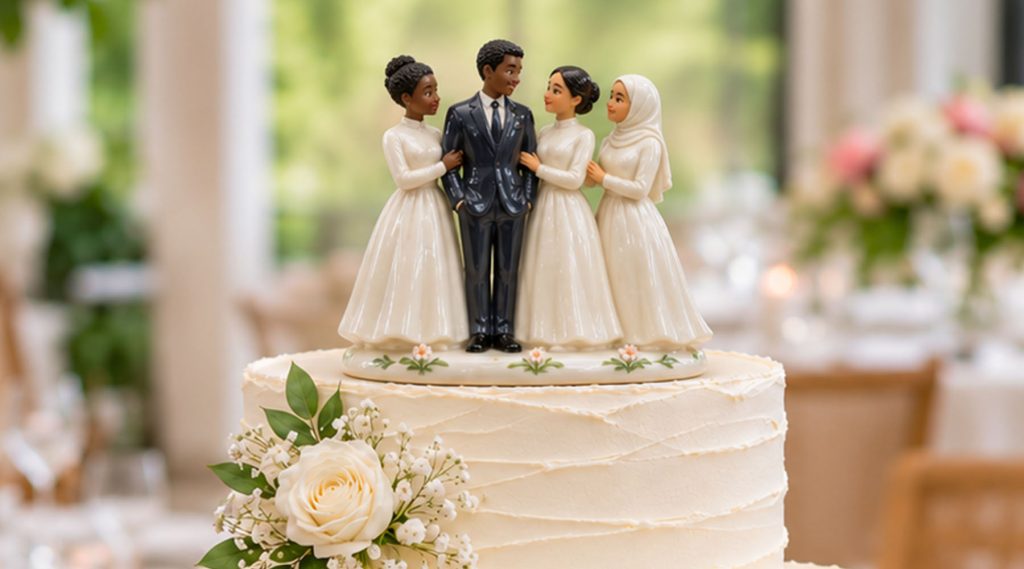
On November 2, the West Hollywood City Council unanimously approved legal recognition for committed relationships involving three or more adults. People in polyamorous relationships will be able to register with the city and receive certain legal protections, including hospital visitation rights and housing protections.
“This law is just the beginning,” said Christina Fialho, an attorney and founder of a bisexual media representation advocacy group who brought the idea of polyamory protections to West Hollywood. “I think it makes it possible for people to dream about a future they once thought was out of reach.”
West Hollywood’s decision reflects a growing cultural interest in alternatives to traditional monogamy. Ethical non-monogamy (ENM) is an umbrella term for the different types of relationships that focus on “the practice of being romantically involved with multiple people who are all aware of and agree to this relationship structure.” And today, it’s being normalized.
A Marie Claire article declared: “From Olivia Wilde’s new comedy The Invite and book-to-screen adaptations like Netflix’s Vladimir to plenty of polyamory podcasts, the topic of inviting a person(s) into a coupleship is proudly out in the open.” And a 2023 Pew Research report found that one-third of American adults considered open marriages acceptable.
The changing attitude toward monogamous relationships isn’t limited to secular society. It’s also becoming a topic of discussion among Christians.
Non-Monogamy in the Church
In October 2026, Lydia Ford surprised her Ohio congregation by introducing a church member as her husband’s second wife. Ford explained that she and her husband, Israel, pastor of LifeWorks Church in Wickliffe, had been in what she called a “polygamous marriage” for nearly three years. The second wife, Shakayla, told the congregation, “It is amazing to know that this is the will of God and to live it,” adding, “We are a family.” Although Ohio law prohibits bigamy, the three say they live together and share finances.
Though Ford’s arrangement involves multiple wives, whereas ENM more broadly includes relationships with multiple partners, whether married or not, both are part of the debate about monogamy within Christian churches. In 2023, delegates of the Evangelical Lutheran Church in Canada voted to develop resources for discussions involving “ethical non-monogamous relationships.” In addition, Reverend Tori Mullin, a national staff person for the United Church of Canada, commented: Such relationships aren’t unbiblical as the Bible doesn’t offer one cohesive model for Christian families.
Furthermore, a 2026 article published by the Presbyterian Outlook stated: “Denominations wrestling with polyamory need to ask themselves why their theology of romantic love should contradict their theology of divine love,” and argued that a minister who loves two partners is “no less capable of preaching the message of God’s grace to humankind.”
But does this shifting view among some Christians align with Scripture? Let’s let the Bible decide.
Just as God calls His people to worship and unite with Him alone, marriage calls for exclusive devotion to one’s spouse.
The Ideal Marriage
Before God pronounced His creation “indeed very good” (Genesis 1:31), He declared, “It is not good that man should be alone; I will make him a helper comparable to him” (Genesis 2:18). Adam and Eve’s union established His original design for marriage: one man and one woman permanently and exclusively joined. “Therefore a man shall leave his father and mother and be joined to his wife, and they shall become one flesh” (v. 24).
Jesus reaffirmed the sanctity of the marriage covenant when questioned by the Pharisees about divorce, saying: “They are no longer two but one flesh. Therefore what God has joined together, let not man separate” (Matthew 19:6). He further explained: “Whoever divorces his wife, except for sexual immorality, and marries another, commits adultery; and whoever marries her who is divorced commits adultery” (v. 9), reinforcing God’s original ideal for marriage.
The apostle Paul further illustrates the significance of marriage by comparing it to Christ’s relationship with His church. After stating that husband and wife become one flesh, he says, “I speak concerning Christ and the church” (Ephesians 5:31–32). Just as God calls His people to worship and unite with Him alone, marriage calls for exclusive devotion to one’s spouse. Scripture even describes idolatry as adultery, comparing Israel’s worship of false gods to a wife being unfaithful to her husband (Jeremiah 3:8–9).
Yet the Bible also records that several patriarchs had multiple wives. How do their examples fit with God’s original design for marriage?
The Pitfalls of Polygamy
Throughout Scripture, accounts of polygamy are typically marked by painful consequences. Although Abraham “believed in the LORD, and He accounted it to him for righteousness” (Genesis 15:6), his taking a secondary wife revealed a lapse in faith. Jealousy and resentment arose between his wives, Sarah and Hagar, and divided his household. This eventually led to Abraham’s painful separation from Hagar and his son Ishmael (Genesis 21:9–14).
Jacob, Abraham’s grandson, faced similar troubles. After marrying sisters Leah and Rachel, and, at their urging, taking their servants as wives, he experienced considerable strife within his family (Genesis 29:23–30; 30:3–13). His wives constantly competed for his affection, and because he loved Rachel best, he favored her sons, Joseph and Benjamin. The resulting family tensions contributed to years of conflict, marked by serious misconduct among his sons (Genesis 34; 35:22; 37:3–4).
Both Abraham’s and Jacob’s marriage decisions reflect their own human choices and their steep repercussions. God’s patience with people in earlier times should not be mistaken for His endorsement of their actions.
Compassion without Compromise
West Hollywood’s new law may reflect changing attitudes toward relationships, but God’s marriage design remains the same. Though Scripture is clear that only marriage between one man and one woman is permissible, it’s vital that as Christians, we reflect Jesus’ love and compassion in dealing with those who disagree.
While we are not to compromise on God’s instruction, we are also to follow the Word’s teaching when it bids: “Brethren, if a man is overtaken in any trespass, you who are spiritual restore such a one in a spirit of gentleness” (Galatians 6:1).
We should encourage others to recognize the blessing biblical marriage offers: a lifelong partnership of love and devotion.
Learn how to build a Christ-centered relationship in Keys for a Happy Marriage.
More on AF Blog
Young Adults Are Showing Up to Church — Why?
Young adults are returning to church, and research reveals why. Discover what draws them in,…

Horror Movies and the Christian
Despite evidence that horror entertainment has a negative psychological impact, the genre is more popular…

Does Believing in the End Times Make Christians Dangerous?
Some claim that end-time belief is increasingly associated with extremism, nationalism, environmental neglect, and a…

WitchTok and the Word: What Scripture Says About Today’s Witchcraft Trend
From TikTok to the box office, witchcraft is going mainstream. Discover what the Bible says…

AI Spiritual Advisors: Would You Trust Your Soul to AI?
From an AI Buddhist monk to video chats with “Jesus,” spiritual deepfakes are spreading fast.…